Category: Houses

  • W. G. Kranz Mansion

    W. G. Kranz house

    This house was built in about 1911, and the architects—Averill & Adams of Washington, D. C.—gave it a bracingly modern interpretation of the Dutch-colonial style. It was featured in the American Architect for September 27, 1911. The only copy we could find of that issue was a scan from microfilm, but we have done our best to clear up the images to make the details visible. They show us that, externally, the only major change has been the enclosing of the side porch to make a sun room, which was done properly, so that we would hardly know it had not been enclosed originally.
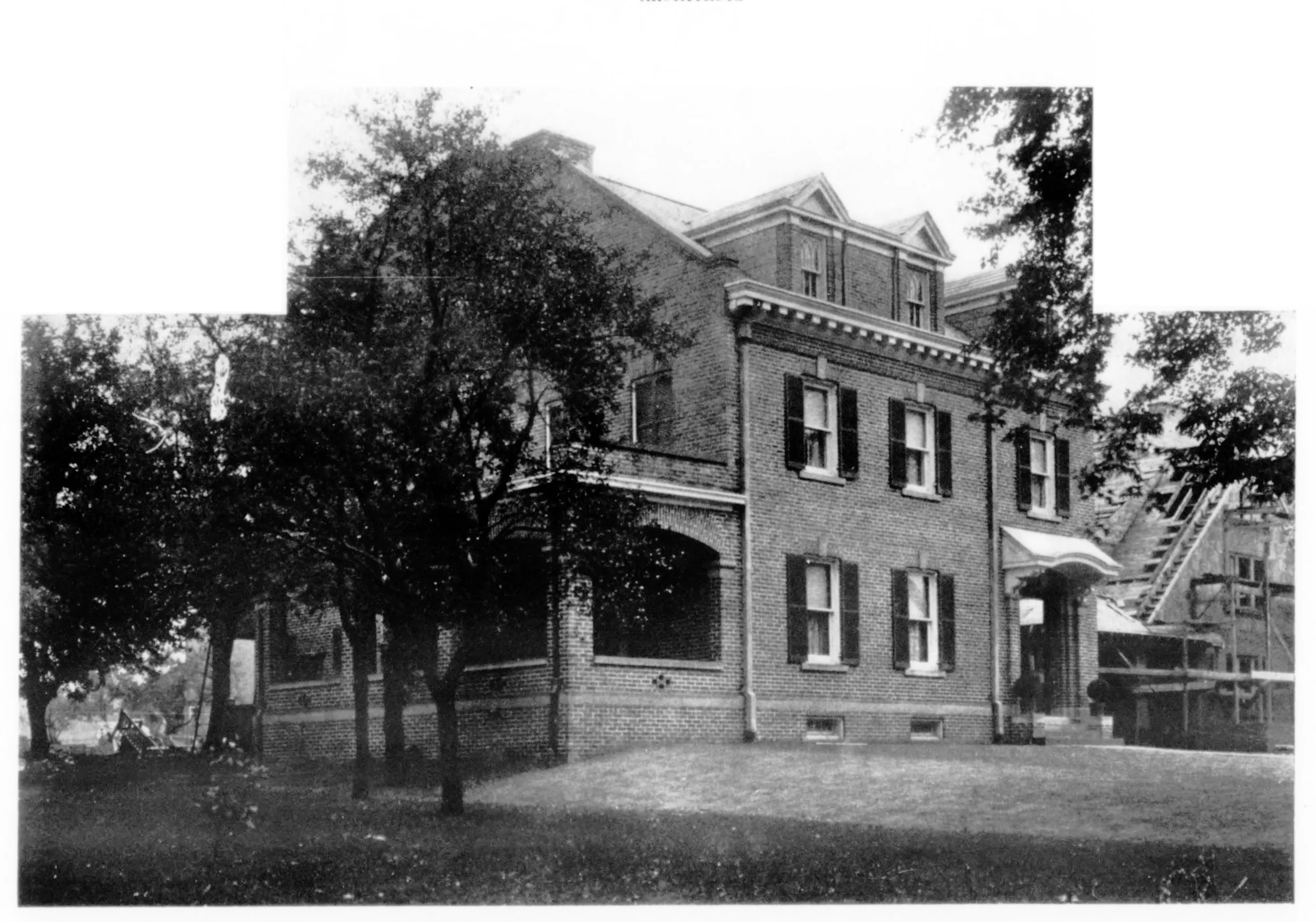
    In the background we can see the Morris Bachman mansion still under construction.
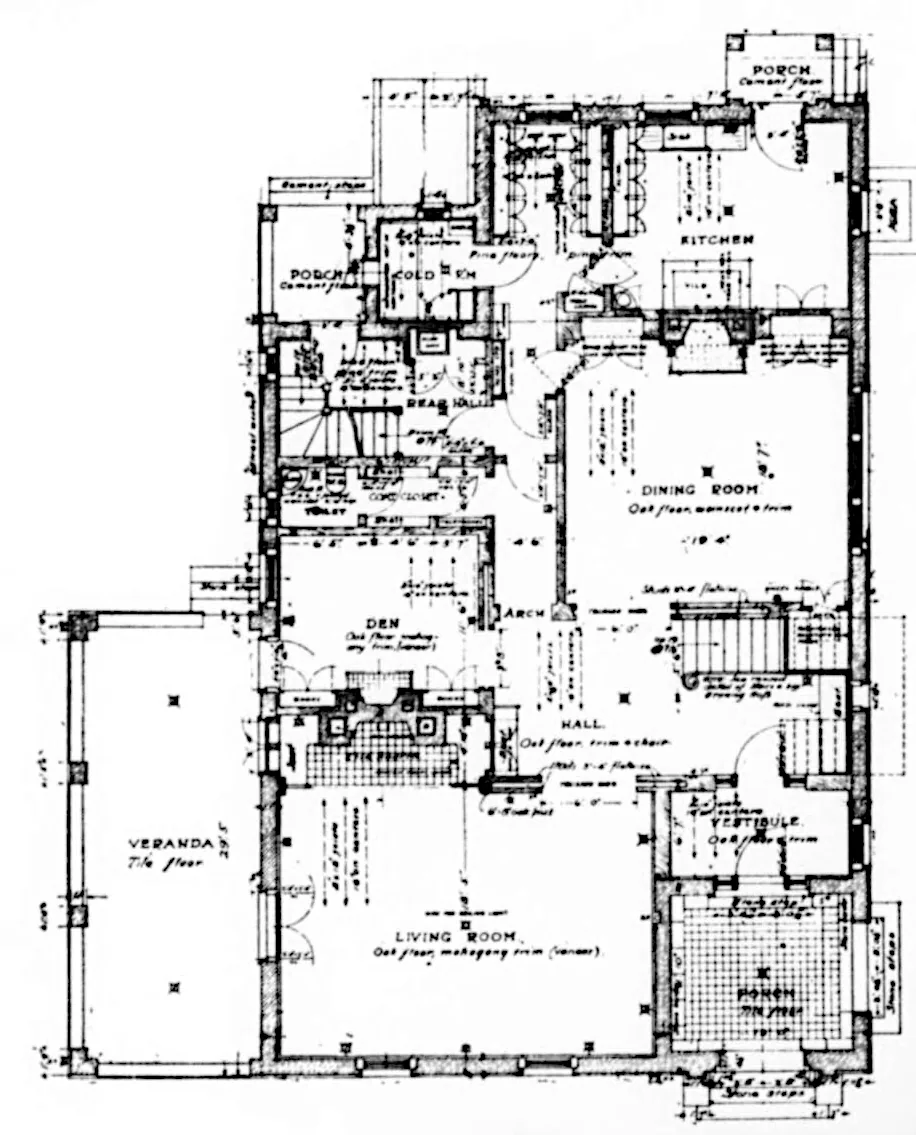
    Ground-floor plan.
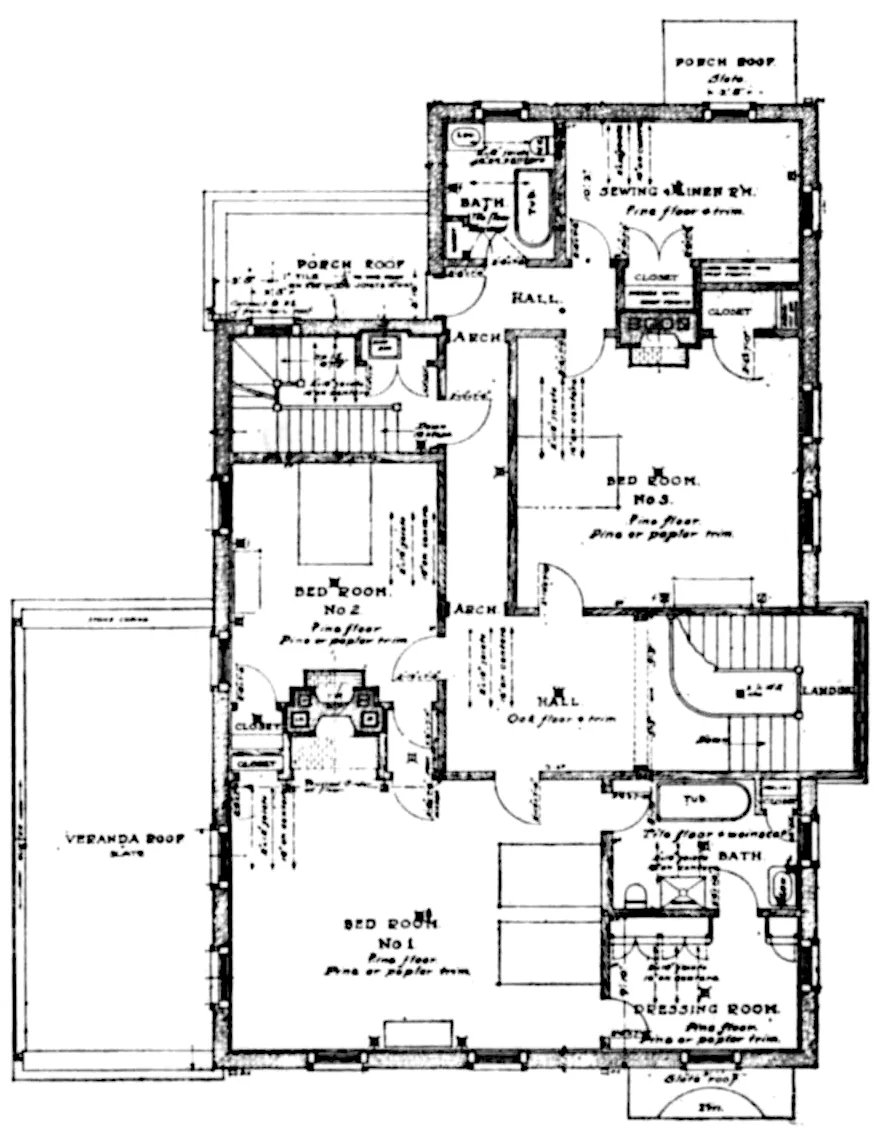
    Second-floor plan.
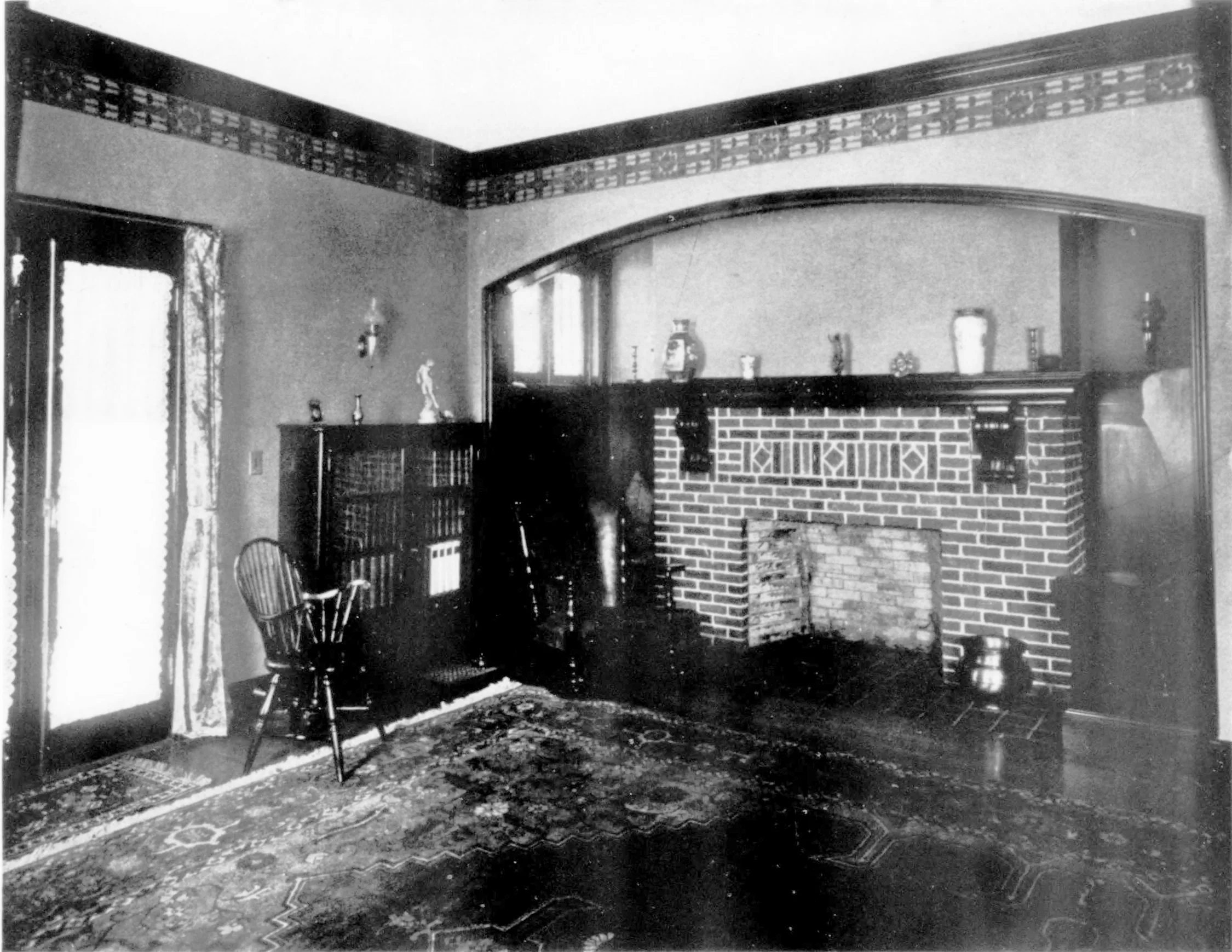
    Living room.
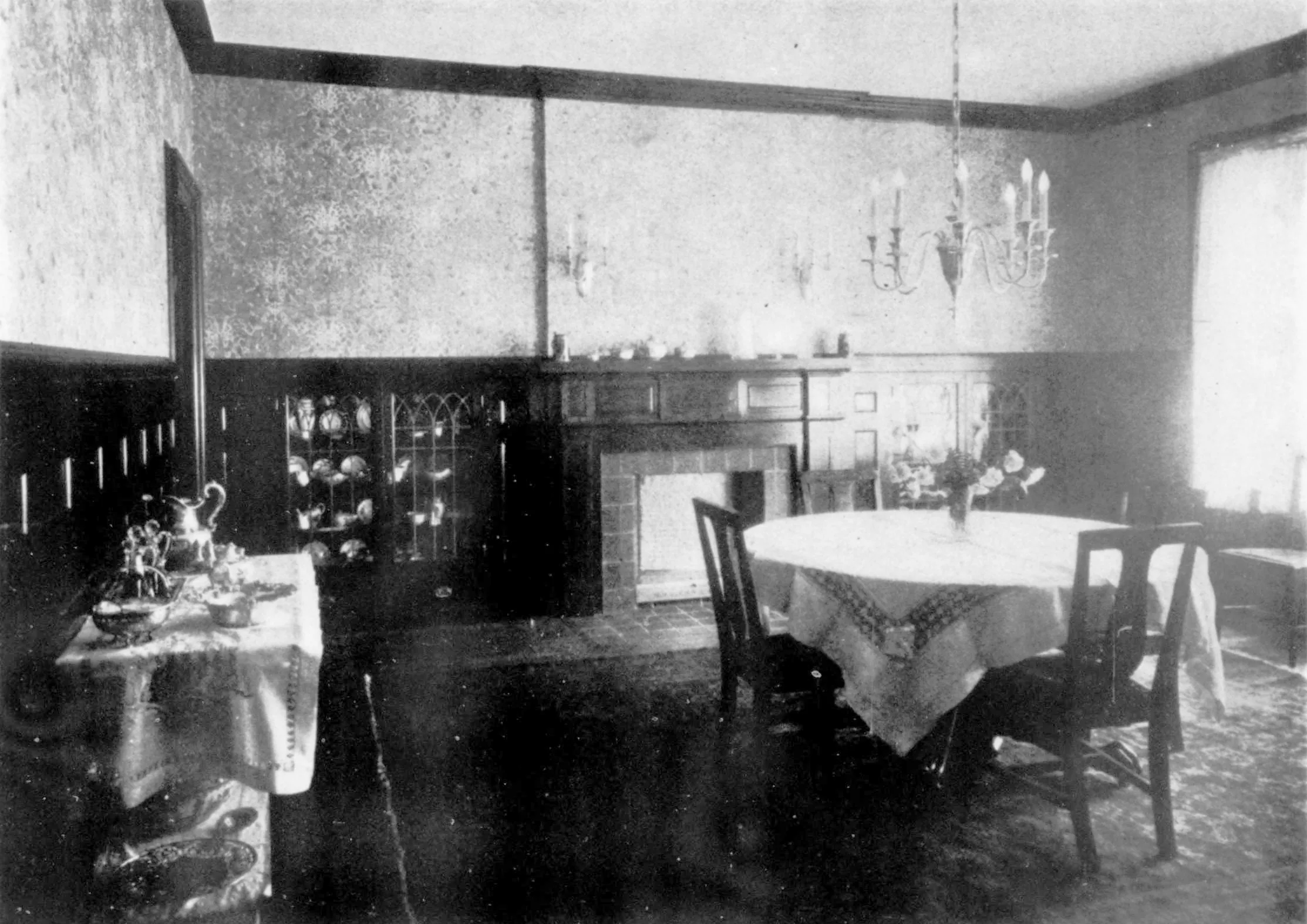
    Dining room.

    Comments
  • Morris Bachman Mansion

    Morris Bachman mansion

    Charles F. Owsley, the son of the Charles H. Owsley who was responsible for many of Sharon’s most distinguished buildings of a generation earlier, designed this hybrid of English cottage and Tudor castle for Morris Bachman, who unexpectedly died in 1909 before the house was completed. (The word “unexpectedly” was probably unnecessary there.) For many decades now it has been an old-age home called Clepper Manor. From a photograph published in 1911, we can see that it was still under construction just after the Kranz house next door was completed.

    Morris Bachman mansion and front gate
    Morris Bachman mansion

  • Stevenson Mansion

    Stevenson Mansion

    This is one of the most extravagant mobile homes in history. John Stevenson was an executive in the New Castle Nail and Wire Company, which obviously brought him a lot of money. He hired New Castle’s own Sydney Foulk to design this extravagant Romanesque house, which cost $100,000 to build in 1894.

    Not long after, he came back from a trip to Europe to find that the company had been absorbed by United States Steel, and there was no place for him in the new organization. He was so angry he stomped out of New Castle—and took his house with him, in kit form, every stone labeled for reassembly, on 55 railcars. It cost another $100,000 to move the house, but he showed them.

    Porch
    Porte cochere
    Stevenson mansion

    Comments
  • Charles H. Wiltsie House

    Charles H. Wiltsie house

    This flamboyantly eclectic house was designed by Sharon’s own E. E. Clepper; it was built in 1910 for the manager of a hardware and construction firm. By big-city standards, Mr. Clepper’s style was about twenty years behind the times; but Mr. Wiltsie certainly got a distinctive house, and the details are unusually well preserved.

    Dormer
    Porch-roof gable
    Charles H. Wiltsie house

    Comments
  • Three Houses on Highland Road

    House on Highland Road

    Highland Road runs through a neighborhood of high-class houses put up in the 1920s or thereabouts. Here are three of them. Above and below, two approaches to the increasingly popular Colonial Revival.

    Georgian house

    The exceptionally fine Georgian mansion above, according to the Sharon Historical Society’s “Roaring Twenties” tour, was designed by “Wolfe & Wolfe of Pittsburgh, Pennsylvania.” That would be the father-and-son team of T. B. and Lawrence Wolfe, who designed many millionaires’ mansions and distinguished churches in Pittsburgh and the surrounding area.

    Tudor house

    Here is a house with Tudor half-timbering that is a good representative of what old Pa Pitt calls the Fairy-Tale Style, where historical accuracy is abandoned and the priority is making the house look like an illustration of an ideal house in a children’s book.


    Comments